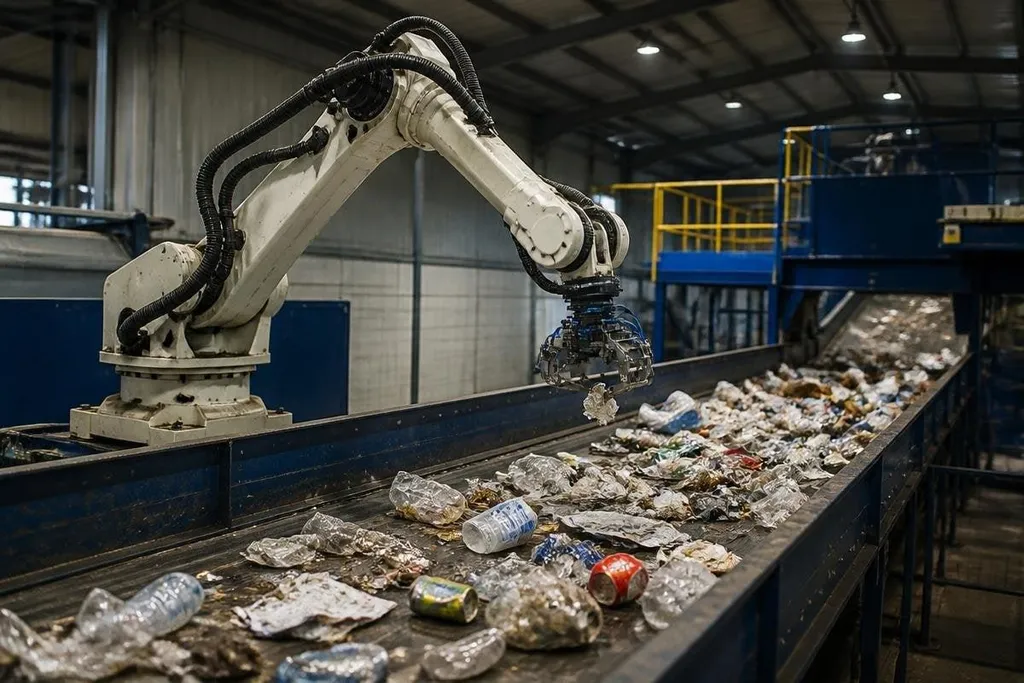
Recycling plants must separate materials that arrive mixed, dirty, crushed, and sometimes wet. Robots are becoming more useful because they can repeat the same sorting task for long periods while people handle work that needs judgment or care.
- Cameras and sensors identify items as they move on a conveyor.
- Robotic grippers or air jets send materials into separate bins.
- People still check quality, clear jams, and manage unusual items.
Sorting is harder than it looks
A conveyor may carry bottles, food containers, paper, metal cans, and pieces of film at the same time. Some items overlap, labels hide the material, and dirt changes what a camera can see.
A sorting robot combines a camera with software that classifies each item. The system then sends a signal to a gripper, robotic arm, or air nozzle. Timing matters: the item may be visible for only a short part of its trip along the belt.
This work needs more than a robot arm. The plant also needs a conveyor, lighting, sensors, software, bins, and a way to check whether items reached the right stream.
If one part falls out of sync, the robot may pick the wrong object or miss it altogether.
What robots change on the line
People can sort materials by sight and touch, but repeated work can be tiring and unsafe when sharp metal, broken glass, or dirty packaging enters the stream. A robot can handle a fixed movement pattern without reaching into the same waste flow all day.
That does not remove the need for workers. People still set up the line, watch for faults, remove blocked items, and inspect material quality. The job shifts toward supervision and maintenance, which require training in sensors, motors, and control software.
The benefit depends on the task. That setup may work well when the belt speed, item size, and material types stay within a known range. A mixed stream with heavy dirt, loose film, or badly damaged objects can reduce sorting accuracy.
Why data matters
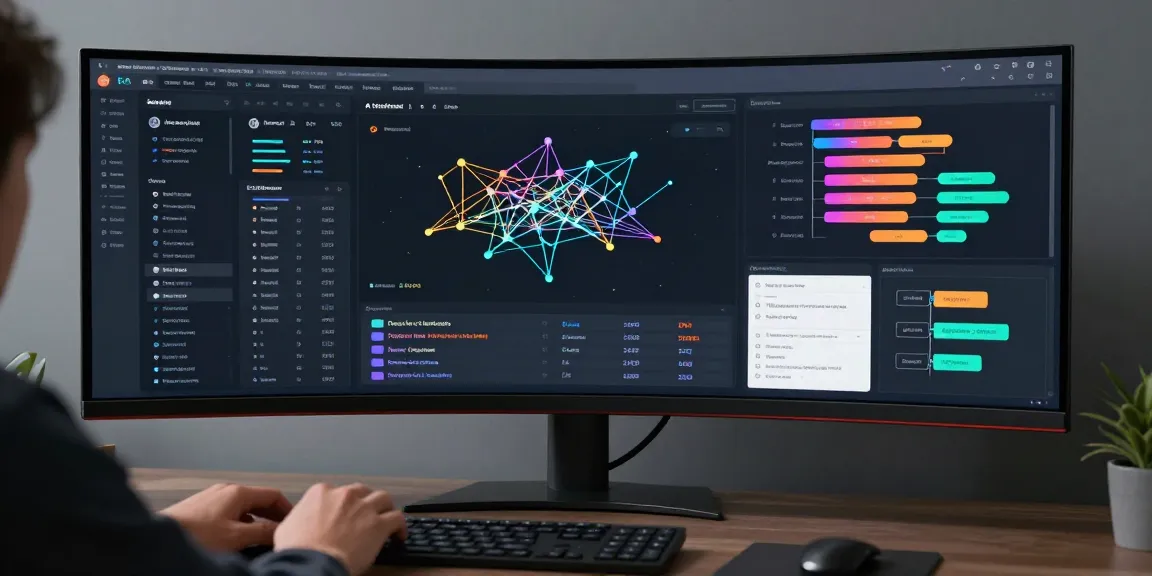
Each camera view gives the control system information about shape, color, location, and sometimes the material itself. The system uses that information to choose when and where to act.
More collected data can help engineers adjust the software for a specific plant. It can also show where mistakes happen. A high error rate near the end of a conveyor may point to poor lighting, belt speed, item overlap, or a gripper that arrives too late.
That is why recycling robots need a clear test plan. Plant managers should measure the material going in, the sorted material coming out, missed items, wrong items, stoppages, and the time needed for cleaning and repairs. Without those figures, a video of a robot picking objects proves very little.
A plant manager can use recycling robot reports from Robot24.com to check which machine ran the test, where it ran, and what the plant measured before the article turns to the limits below.
The limits that still matter
Robots do not fix a poor recycling process by themselves. A plant may need better conveyors, steadier lighting, cleaner input material, or a different layout before a sorting system can work well.
Maintenance also matters. Cameras need cleaning, grippers wear out, air systems can lose pressure, and software needs updates when the material stream changes. A stoppage can affect the whole line, so spare parts and trained staff belong in the purchase plan.
The cost case depends on the plant's volume, labor needs, material mix, and operating hours. A robot may fit a large sorting line with steady input. A smaller site may get more value from better screens, magnets, or manual quality checks.
I’d judge a recycling robot by the material it sorts after a full shift, not by a clean demonstration with easy objects.
A buying checklist
Before choosing a system, check these points:
- Define the material stream: record the items, dirt, moisture, and overlap the robot must handle.
- Set the quality target: decide how much wrong material the finished stream can contain.
- Test the full line: include the conveyor, lighting, sensors, robot, bins, and control software.
- Count stoppage time: include cleaning, jams, repairs, software checks, and staff training.
- Plan for exceptions: decide who removes batteries, sharp objects, tangled film, and unknown items.
- Ask for operating proof: request results using material that matches your own stream, not a staged sample.
The next step is careful measurement at each plant. Recycling robots will matter most where they solve a defined sorting problem, and their value will show in the material leaving the line.